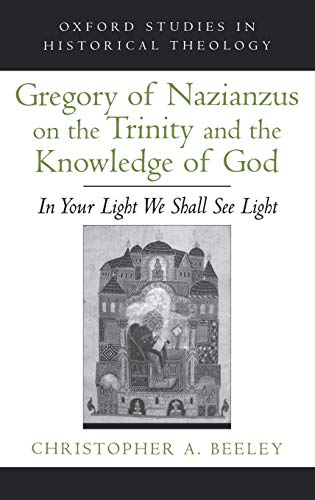
St. Gregory the Theologian
Archbishop of ConstantinopleFeast January 25
12 readers asked
One of only three saints surnamed 'the Theologian' in the Orthodox Church, for the depth and exactness of his speech concerning the Holy Trinity.
- Born
- c. 329 (Arianzus in Cappadocia)
- Reposed
- January 25, 390
- See
- Constantinople
- Feast
- January 25 · January 30
Son of the bishop of Nazianzus, Gregory was given to God by his mother Nonna at his birth. He studied at Caesarea, Alexandria, and Athens, where his friendship with Basil the Great deepened into what he later called 'one soul in two bodies.'
He desired the silence of philosophy and the monastic life, but was repeatedly drawn into the labor of the Church: first as priest in his father's parish, then briefly as bishop of the dusty crossroads of Sasima, then, against his will, to Constantinople in 379 to lead the small remnant of the orthodox flock in a city held by Arians.
From a private chapel called the Anastasis, 'Resurrection', he preached the Five Theological Orations that gave him his surname. Within two years he had so recalled the city to the Nicene faith that he opened the Second Ecumenical Council of 381 as archbishop of Constantinople.
He resigned the see almost immediately, longing for the rest he had never had. He returned to Cappadocia, withdrew to his family estate at Arianzus, and spent his last years writing poetry and ascetical letters until his repose on January 25, 390.
Events during this saint's life
Explore the interactive timeline
Books in print
These works are licensed and copyrighted by their publishers and cannot be hosted on Purify. As an Amazon Associate, Purify earns from qualifying purchases.
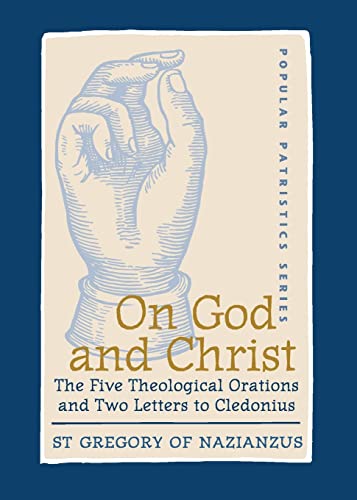
- On God and ChristBy Gregory of Nazianzus · St. Vladimir's Seminary Press, 2002The orations that earned Gregory the title 'the Theologian', the dogmatic backbone of the Cappadocian doctrine of the Trinity and the two natures of Christ. Williams and Wickham translation.Buy on Amazon
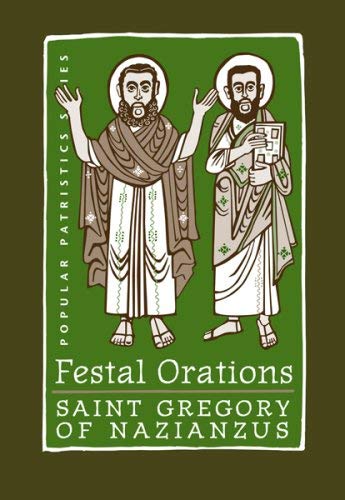
- Festal OrationsBy Gregory of Nazianzus · St. Vladimir's Seminary Press, 2008The homilies appointed for Nativity, Theophany, Pascha, and Pentecost, poetic, dense, and woven directly into Byzantine hymnography. Nonna Verna Harrison's translation.Buy on Amazon
Holy St. Gregory the Theologian, pray to God for us.